Amiodarone is a highly effective agent for the prophylaxis and treatment of many cardiac rhythm disturbances, ranging from paroxysmal atrial fibrillation to life threatening ventricular tachyarrhythmias. 1 unlike many other antiarrhythmic drugs, amiodarone appears to be safe in patients with significant left ventricular dysfunction,2-5 and may confer prognostic benefit in some patient subgroups. Temporary thyrotoxicosis (high thyroid hormone levels in the blood) followed by temporary hypothyroidism, is a common cause of thyroid problems after the delivery of a baby. subacute thyroiditis is the major cause of pain in the thyroid. thyroiditis can also be seen in patients taking the drugs interferon and amiodarone. Between 2006 and 2018, 8 patients were identified with amiodarone induced thyrotoxicosis (ait). amiodarone was prescribed for af in 7 patients and .
More amiodarone thyrotoxicosis images. Help your patients get started on multaq. see boxed warning, pi & safety amiodarone thyrotoxicosis info.

100 Free Easy To Use
See more videos for amiodarone thyrotoxicosis. Amiodarone-induced thyrotoxicosis (ait) develops in ∼15% of patients under amiodarone therapy (1, 2). · occurrence of ait is usually considered to be . Amiodarone, an iodine-rich medication used to treat abnormal heart rhythms, can result in thyrotoxicosis in 15% of patients. it is important to differentiate between . Bogazzi f, bartalena l, dell'unto e, et al. proportion of type 1 and type 2 amiodarone-induced thyrotoxicosis has changed over a 27-year period in italy. clin endocrinol (oxf) 2007; 67:533. yiu kh, jim mh, siu cw, et al. amiodarone-induced thyrotoxicosis is a predictor of adverse cardiovascular outcome. j clin endocrinol metab 2009; 94:109.

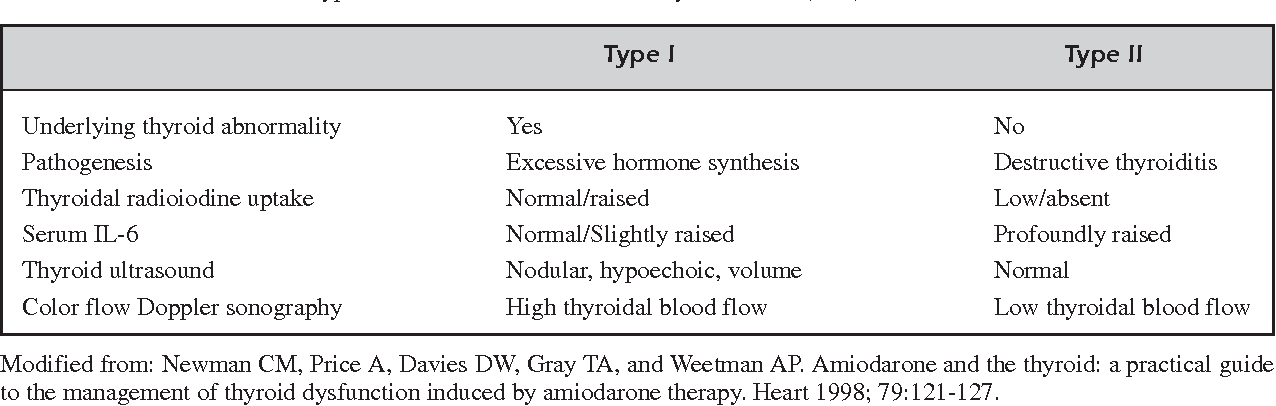
Amiodarone, a benzofuranic iodine-rich antiarrhythmic drug, causes thyroid dysfunction in 15–20% of cases. although amiodarone-induced hypothyroidism poses no particular problem, amiodarone-induced thyrotoxicosis (ait) is a diagnostic and therapeutic challenge. there are two main forms of ait: type 1, a form of iodine-induced hyperthyroidism, and type 2, a drug-induced destructive thyroiditis. Mar 22, 2018 conclusions— continuing amiodarone has no adverse influence on response to treatment of ait. first-line therapy with a thionamide alone is . Diagnosis amiodarone-induced thyrotoxicosis (ait) with features consistent with both ait type i (in which thyroid antibodies and nodular goiter are present) and . Yiu kh, jim mh, siu cw, et al. amiodarone-induced thyrotoxicosis is a predictor of adverse cardiovascular outcome. j clin endocrinol metab 2009; 94:109. o'sullivan aj, lewis m, diamond t. amiodarone-induced thyrotoxicosis: left ventricular dysfunction is associated with increased mortality. eur j endocrinol 2006; 154:533.
Amiodarone-induced thyrotoxicosis was the most common cause of thyroid storm (33%), followed by graves’ disease (26%). autoimmune thyroiditis, toxic multinodular goiter, and toxic solitary thyroid adenoma were much less frequent causes (10%, 9%, and 6% respectively). However, the use of amiodarone is associated with several side-effects, including photosensitivity, corneal microdeposits, pulmonary toxicity, hepatotoxicity, peripheral neuropathy, hyperthyroidism and hypothyroidism. 1-3 the purposes of this review are to summarise expected and abnormal changes in thyroid function and thyroid hormone metabolism.
Thyrotoxicosis Disease Diagnosis And Treatment
Amiodarone inhibits metabolism through several cytochrome p450 pathways, causing interactions with many commonly used drugs. due to the long half-life of amiodarone, the onset of drug interactions may be slow after initiating amiodarone, and interactions may be observed for several months after discontinuation of amiodarone. Type 1 amiodarone induced thyrotoxicosis: occurs with preexisting thyroid disease, due to iodine induced excess thyroid hormone synthesis microscopic changes are due primarily to preexisting disease. type 2 amiodarone induced thyrotoxicosis: develops as an inflammatory process in a normal thyroid (ncbi amiodarone induced thyrotoxicosis). Amiodarone should only be used in the treatment of life-threatening ventricular arrhythmias that have not responded to other treatments. amiodarone does not appear to increase life expectancy and can.
This is a condition called type i amiodarone induced thyrotoxicosis (hyperthyroidism). 5-7 type i amiodarone induced thyrotoxicosis (ait) is more likely to occur in patients who live in areas of low iodine intake or have some form of underlying thyroid disease (such as multinodular goiter, latent grave's disease, etc. ) where the iodine exposure could possibly trigger thyroid hormone production. 8. This is a condition called type i amiodarone induced thyrotoxicosis (hyperthyroidism). 5-7 type i amiodarone induced thyrotoxicosis (ait) is more likely to occur in patients who live in areas of low iodine intake or have some form of underlying thyroid disease (such as multinodular goiter, latent grave's disease, etc. ) where the iodine exposure. Amiodarone, a benzofuranic iodine-rich antiarrhythmic drug, causes thyroid dysfunction in 15–20% of cases. although amiodarone-induced hypothyroidism poses no particular problem, amiodarone-induced thyrotoxicosis (ait) is a diagnostic and therapeutic challenge.
Aug 22, 2018 management of amiodarone-induced thyrotoxicosis at a cardiac transplantation centre background: amiodarone-induced thyrotoxicosis (ait) . amiodarone thyrotoxicosis Join the 10 million americans who use goodrx to save each month. no commitment or fees! goodrx is a 1 medical app in the iphone and android app stores. simple & easy to use!.
Apr 28, 2021 · thyrotoxicosis refers to the symptoms caused by the excessive circulation of thyroid hormones. it is typically caused by thyroid gland hyperactivity (i. e. hyperthyroidism), the most common causes. Amiodarone is a widely amiodarone thyrotoxicosis used, effective antiarrhythmic drug. its high iodine contents and its direct toxic effect on the thyroid gland cause thyroid function changes .
Amiodarone (am), a potent class iii anti-arrhythmic drug, is an iodine-rich compound with a structural resemblance to thyroid hormones triiodothyronine (t3) and thyroxine (t4). at the commonly employed doses, am causes iodine overload up to 50-100 times the optimal daily intake, which may be respons. Amiodarone-induced thyrotoxicosis (ait) can occur in patients with (ait 1) or without (ait 2) an underlying thyroid disease. ait 1 is a true iodine-induced hyperthyroidism occurring in patients with an underlying thyroid autonomy while ait 2 is a drug-induced destructive thyroiditis.
Results: 400 patients bear a diagnosis of thyrotoxicosis and consumed amiodarone. however, only 39 patients met the full definition of ait. the composite outcome of mortality, ait-related complications and thyroidectomy was achieved in the vast majority of patients (94. 8%, 37 out of 39 participants). The authors present a case of a 55-year-old gentleman with a medical history of atrial fibrillation on amiodarone who presented with weight loss, palpitations and exertional dyspnoea. thyroid function tests revealed thyrotoxicosis with a free thyroxine (t4) of 117 pmol/l and a thyroid-stimulating ho. Patients treated with amiodarone may manifest altered thyroid hormone profile without thyroid dysfunction, or they may present with clinically significant amiodarone-induced hypothyroidism or amiodarone-induced thyrotoxicosis. the former results from the inability of the thyroid to escape from the wolff-chaikoff effect.


0 komentar:
Posting Komentar