Ace Inhibitors Vs Beta Blockers Facts Side Effects For
Watch out : beta blockers /acei may worsen hyperkalemia early introduction of acei and arbs is a strong risk factor for systemic as well as myocardial hyperkalemia. this is especially true in diabetic individuals who have low rennin levels due to diabetic micro circulation defect in kidneys. Lop with non-cardio-selective beta-blockers. case report. we have described hyperkalemia in a patient with angina pectoris receiving propranolol, clinically . General beta-blockers: efficacy in cardiovascular beta blockers hyperkalemia diseases drugs blocking beta adrenergic receptors (beta-blockers) have become central to the management of cardiovascular diseases. specifically, they have proven efficacy in: 1. treatment of angina 2. prevention of recurrent myocardial infarction 3. treatment of hypertension 4. treatment of symptoms of heart failure due to systolic dysfunction.
Apr 9, 2020 beta-adrenergic agoniststhrough activation of cyclic adenosine monophosphate (camp), agonists are used in the treatment of hyperkalemia?. The reduction in renal potassium excretion due to inhibition of the renin-angiotensin-aldosterone system represents the most important mechanism by which drugs are known to cause hyperkalemia. medications that alter transmembrane potassium movement include amino acids, beta-blockers, calcium channel blockers, suxamethonium, and mannitol. Hyperkalemia with beta blockers! 1. beta blockers suppress catecholamine-stimulated renin release, thereby decreasing aldosterone synthesis. 2. more importantly nonselective beta blockers decrease cellular uptake of potassium. ( nejm ).
Calcium Channel Blocker Ccb Betablocker Bbl Overdose
Jan 26, 2012 · inhaled beta-agonists are usually ineffective in patients taking beta-blockers and generally ineffective in 30%–40% of patients for unknown reasons. however, studies showed that the effect of beta-agonists and insulin together is additive in lowering potassium level, superior to using each of them alone, and may prevent insulin-induced. Beta blockers that block β2 receptors may cause shortness of breath in asthmatics. as with other drugs used for treating high blood pressure, sexual dysfunction may occur. beta blockers may cause low or high blood glucose and mask the symptoms of low blood glucose (hypoglycemia) in people with diabetes.
Beta Blockers And Hyperkalemia Dr S Venkatesan Md
Aug 19, 2020 topic outline · increased airways resistance · exacerbation of peripheral artery disease · facilitation of hypoglycemia · hyperkalemia · depression, . Beta blockers (beta-blockers, β-blockers, etc. ) are a class of medications that are predominantly used to manage abnormal heart rhythms, and to protect the heart from a second heart attack (myocardial infarction) after a first beta blockers hyperkalemia heart attack (secondary prevention).
Hyperkalemia American Family Physician
Jan 15, 2006 · hyperkalemia caused by the use of ace inhibitors or angiotensin receptor blockers in patients with chronic renal failure and metabolic acidosis may respond to sodium bicarbonate supplementation. Beta blockers. digoxin toxicity. somatostatin. succinylcholine (anectine) cell breakdown/leakage. hyperkalemic periodic paralysis. increased intake. potassium supplementation. red blood cell. Beta blockers should be initiated early in all patients (without contraindications) and continued long-term if tolerated. [33] beta blockers hyperkalemia beta blockers decrease the size of the infarct and also reduce early and delayed mortality rates in patients with acute mi. angina pect oris: first-line treatment for stable angina pectoris in addition to ace inhibitors.
Hyperkalemia caused by the use of ace inhibitors or angiotensin receptor blockers in patients with chronic renal failure and metabolic acidosis may respond to sodium bicarbonate supplementation. Feb 16, 2017 other drugs with the potential to cause hyperkalemia include beta-blockers, succinylcholine, trimethoprim-sulfamethoxazole, non-steroidal .
Hyperkalemia American Family Physician
Jan 15, 2006 beta blockers. beta blockers hyperkalemia decreases sodium-potassium adenosine triphosphatase (atpase) activity; beta2 agonists decrease potassium levels. More beta blockers hyperkalemia images. Sep 2, 2015 reduction of potassium cellular transport, beta-blockers, propranolol, drug-induced hyperkalemia: old culprits and new offenders. Aug 19, 2020 · properties beta blockers beta blockers drug interactions; related topics. acute myocardial infarction: role of beta blocker therapy; antihypertensive drugs and lipids; beta blocker poisoning; causes and evaluation of hyperkalemia in adults; causes of hypokalemia in adults; choice of drug therapy in primary (essential) hypertension; clinical.
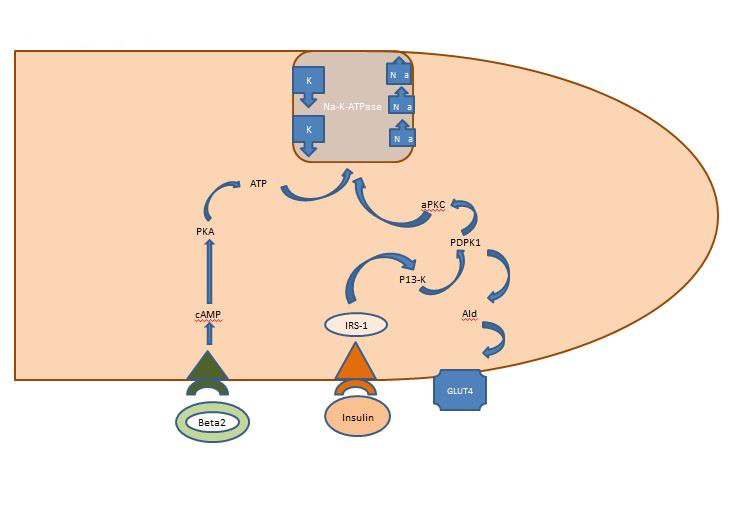
Beta2-adrenergic agonists act on beta-2 receptors to drive potassium into the cells. therefore, beta blockers can raise potassium levels by blocking beta-2 . Feb 24, 2021 · the cardio-selective beta-1-blockers include atenolol, betaxolol, bisoprolol, esmolol, acebutolol, metoprolol, and nebivolol. fda approved uses of beta-1-selective blockers include hypertension, chronic stable angina, heart failure, post-myocardial infarction, and decreased left ventricular function after a recent myocardial infarction. non-fda approved uses include migraine prophylaxis. Dec 15, 2020 if you have hyperkalemia, you have too much potassium in your blood. blockers (arbs); blood pressure drugs called beta-blockers .
Dec 10, 2016 · sodium channels may be blocked by certain beta-blockers (acebutolol, betaxolol, carvedilol, oxprenolol, pindolol, propranolol). clinically, sodium channel blockade manifests as widening of the qrs, which may lead to monomorphic vt. management involves iv hypertonic bicarbonate, similar to a tricyclic overdose. Less common causes can include: massive injury resulting in muscle damage burns over large parts of the body high-volume blood transfusions hiv and certain other infections alcoholism or heavy drug use that breaks down muscle fibers, releasing potassium. Apr 11, 2016 antihypertensive medications were classified as aceis, arbs, direct renin inhibitors, β-blockers, potassium-sparing diuretics (including .
Other drugs with the potential to cause hyperkalemia include beta-blockers, succinylcholine, trimethoprim-sulfamethoxazole, non-steroidal anti-inflammatory drugs (nsaids), cyclosporine, heparins, tacrolimus, and excessive dosing of potassium supplements. Conclusion: hyperkalemia can be unpredictable and life-threatening complication of propranolol or a non-selective adrenergic beta blocker treatment, . β-blocker-induced hyperkalemia is a rare nonspecific side effect of β-blocker therapy as illustrated by the effect from two different β-blockers in the same patient. it appears from a review of the literature that a biological difference between the 2 available forms of metoprolol, tartrate or succinate, is unlikely. Feb 15, 2016 presence of hyperkalemia: patients with beta-blocker or calcium channel blocker intoxication may or may not have hyperkalemia, whereas beta blockers hyperkalemia this .


0 komentar:
Posting Komentar